
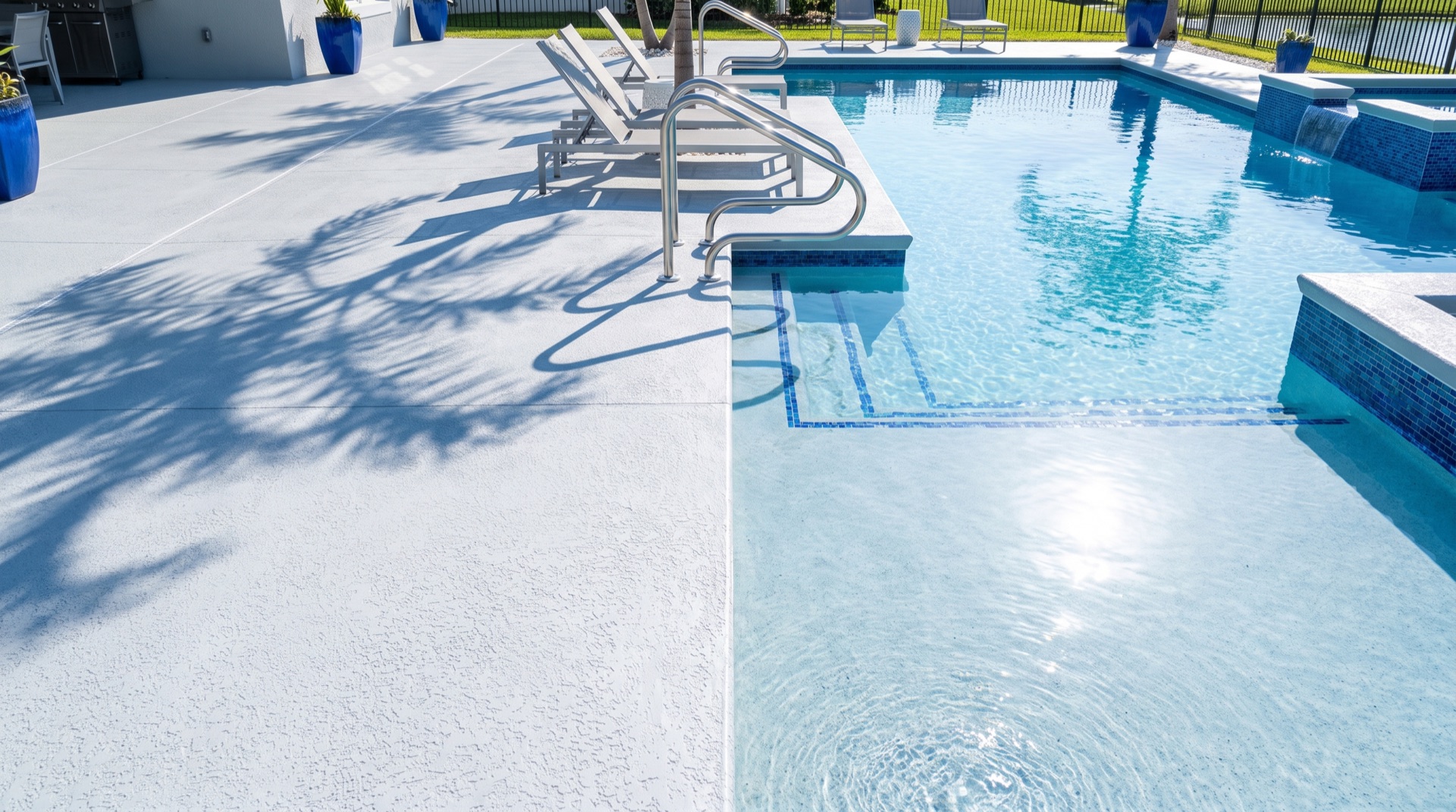
A pool deck punishes anything you put on it
No surface at your house works harder than the concrete around a pool: standing water half the year, chlorine and salt splash, sunscreen, bare feet that need grip, and Florida UV baking it from above while slab moisture pushes from below. Whatever goes on that deck faces wet and sun at the same time — the exact combination that destroys painted surfaces fastest. That's the context for this whole comparison.
Pool deck paint — cheap, fast, temporary
Acrylic deck paint costs $30–$60 a gallon, rolls on in a weekend, and immediately makes a tired deck look fresher. If you're selling the house next spring or stretching a season out of a deck you plan to properly resurface later, it does that job. What it can't do is last: paint sits on the surface rather than keying into it, and a pool deck's constant wet-dry cycling works at that bond relentlessly. Expect chalking and fade in the first year or two and peeling by year three — sooner in full sun. Smooth paint also turns slick the moment it's wet unless you mix in anti-slip grit, and that grit wears away with the paint it's suspended in.
A professional coating — an engineered wearing surface
A deck coating is a different class of product installed a different way. The slab is diamond-ground and moisture-tested, cracks are repaired, and a UV-stable polyaspartic system is built up with a slip-resistant texture broadcast into the coating — grip that's part of the floor, not sprinkled on top. Light, cool-touch colors reflect heat instead of storing it, and the finished surface shrugs off chlorine, salt, and sunscreen. It hides the spider cracks, and it's a resurfacing, not a repour — no demolition. Installed cost is real money (see current ranges), but it's a 10+ year surface, not a 2-year one.
| Deck paint | Professional coating | |
|---|---|---|
| Upfront cost | $100–$300 DIY | Installed, per-sq-ft pricing |
| Lifespan on a FL pool deck | 1–3 years | 10+ years |
| Wet-foot grip | Slick unless gritted; grit wears off | Texture built into the finish |
| UV & chlorine | Chalks and fades | UV-stable, chemical-resistant |
| Heat underfoot | Depends on color | Cool-touch, light-toned options |
| Hides cracks & wear | Briefly | Yes — new wearing surface |
The math over 10 yearsPaint isn't one purchase — it's a subscription. Repainting every 2–3 years means buying, prepping, and rolling the same deck four or five times a decade, with a slick-when-wet surface in between. A coating is one install with hose-and-broom upkeep. If you'll own the home more than a few years, the coating usually wins on total cost — and it's the only option that solves grip and heat at the same time.
When paint is genuinely the right call
Honest exceptions: you're listing the house soon and need it presentable, the budget truly is a few hundred dollars right now, or the deck is due for repair work you're deferring anyway. Paint buys a season or two of looking cared-for. Just go in knowing what it is — a refresh, not a surface — and skip it entirely if the deck already has a failing coat on it, because new product over a peeling layer fails on the same schedule as the layer underneath. If you're weighing paint, stain, sealer, or a textured coating for a Jacksonville deck, pool deck painting & coating lays out the costs side by side.
Pool country: the 904's backyard decks
Backyard pools are near-universal in Nocatee, Fleming Island, Ponte Vedra, and across the 904 — and so are chalky, painted-over decks on their second or third coat. If yours is due, get a measured, itemized quote before defaulting to another round of paint: pool deck resurfacing is usually a one-day install.