
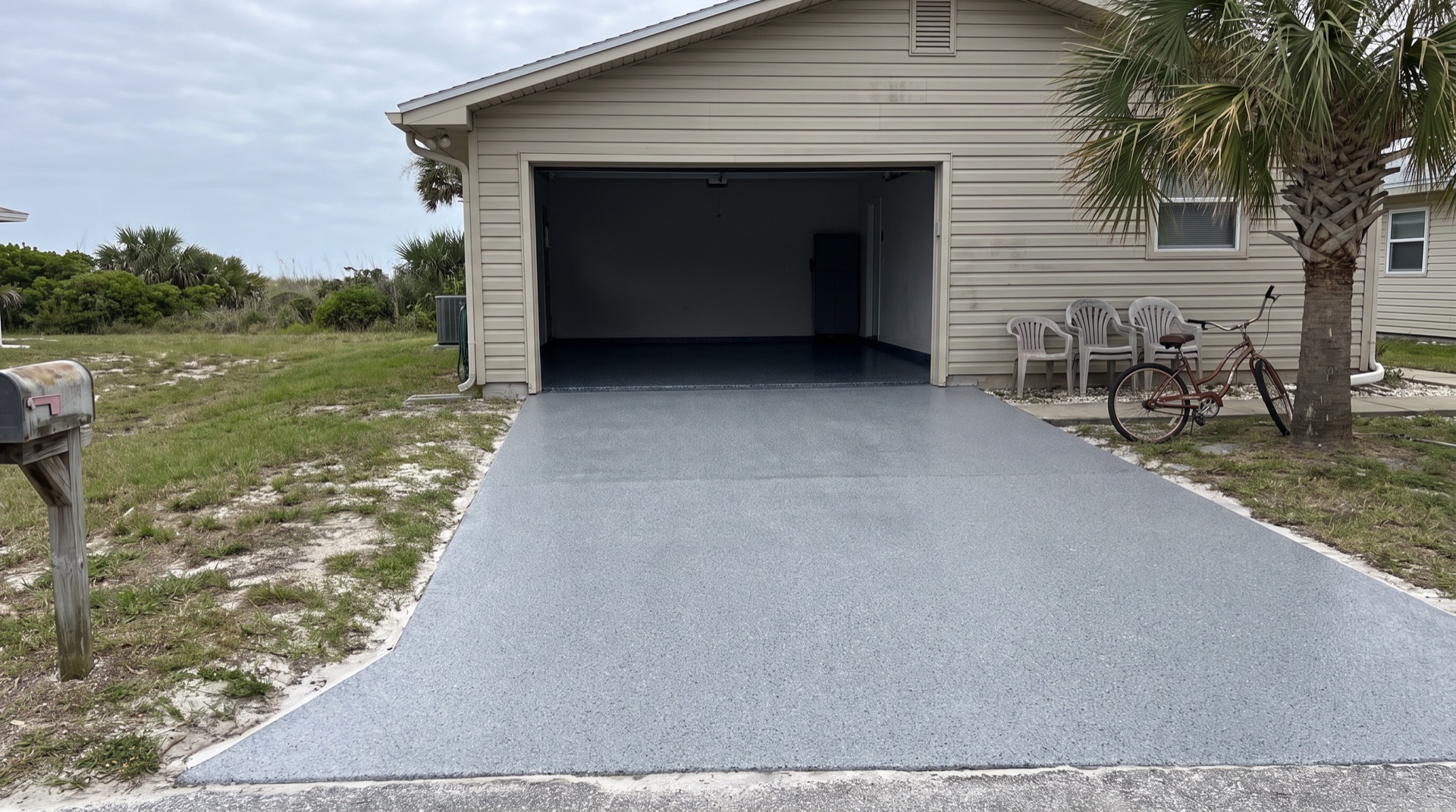
Beach concrete fails differently than inland concrete
A slab three blocks from the Atlantic lives a different life than one in Mandarin. Sand is abrasive — it gets tracked across every driveway and pool deck and works like fine sandpaper underfoot and under tires. Salt spray carries in on the wind and keeps working into the concrete long after the surface looks dry. And because the water table out here sits high, beach slabs hold moisture from underneath, which is the single most common reason a coating lets go months after it went down.
That last one matters more than most homeowners realize. A slab can look bone dry and still be pushing vapor up through it. That's why every job here starts with a moisture test, not a pressure wash — and why the cheap roll-on jobs that look fine in April are peeling at the edges by hurricane season.
Driveways are the job out hereAt the Beaches, driveways get asked about more than garages — short slabs, heavy sun, permanent sand. A coated driveway gets a slip-resistant, UV-stable finish that won't yellow or lift tire marks, and it hides the rust staining that beach irrigation water leaves behind. See driveway coatings →
Driveway coating vs. driveway painting at the beach
People search for “driveway repainting” out here constantly, and it's worth being straight about what that actually buys you. Driveway paint is a thin acrylic film rolled over the surface. Inland it might give you a few years. At the Beaches it gets attacked from three directions at once: sand abrades it from above, salt works underneath it, and trapped slab moisture pushes it off from below. Two seasons is a realistic life expectancy, and then it has to be stripped before anything better can go down.
A coating is a different animal. The slab is diamond-ground so the resin keys into the concrete rather than resting on it, cracks and spalls are repaired, and the whole thing is sealed under a UV-stable polyaspartic topcoat. It costs more the first time and it's the last time you pay for it in a decade. The paint-vs-coating breakdown is here →
What we coat at the Beaches
Every service runs here, matched to the surface and the salt-air exposure:
Driveways
Slip-resistant, UV-stable finishes that shrug off sand and tire marks.
Driveways →Pool decks
Cool-touch, non-slip systems for decks that stay wet and sandy.
Pool decks →Patios & lanais
Finish a screened porch that's fighting salt air year-round.
Patios →Garage floors
Seal a beach garage slab against moisture, rust and sand.
Garage coatings →Slippery when wet is not optional hereBetween pool splash-out, afternoon storms and hosing sand off everything, beach concrete is wet more than it's dry. The traction comes from graded aggregate broadcast into the coating, not grit sprinkled on top that scuffs away. How non-slip coatings are graded →