
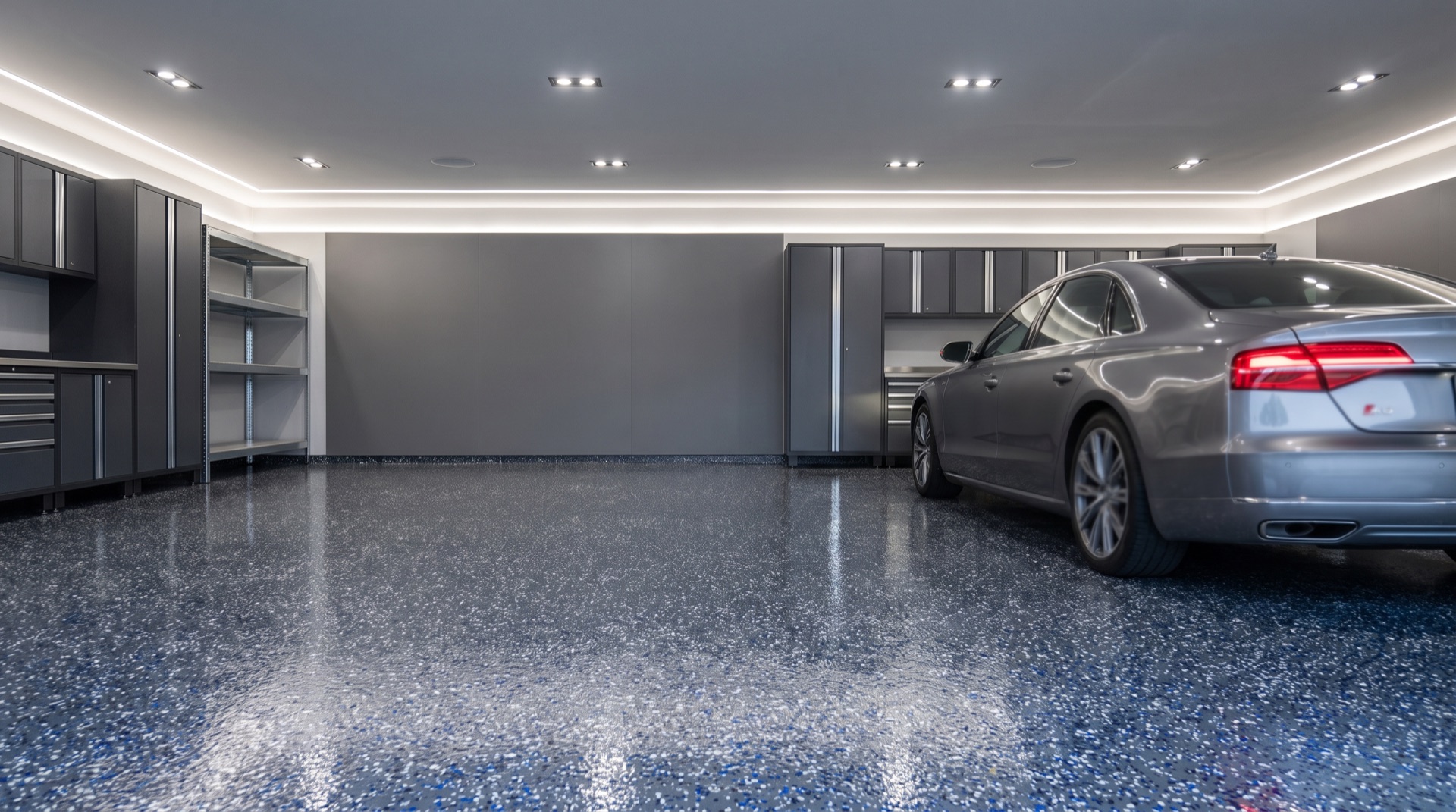
The best slab to coat is one nobody's parked on yet
Northeast Florida is building fast — Nocatee, St. Johns, RiverTown, and World Golf Village are full of garages with slabs that were poured months ago and have never seen a drop of oil. That's the ideal canvas. Everything that makes an older garage floor expensive to coat — grinding off a failed coating, chasing out years of stains, repairing heavy cracking — simply isn't there yet. You're coating clean, sound concrete, which means less labor and a floor that bonds beautifully.
There's also a timing advantage most builders don't mention: the builder's "garage floor" is just bare, sealed-at-best concrete that will dust, stain, and crack the first time you use it as a real garage. Coating it before that happens locks in a finished floor from day one.
The one rule: let it cure first
Fresh concrete is full of water, and it keeps releasing moisture vapor for weeks as it cures. Coat it too early and that vapor pushes up under the film and causes blistering — the same moisture failure that ruins rushed jobs. The standard guideline is about 28 days of cure before coating. A good installer won't just count days, though — they'll run a moisture test on the slab, because a thick slab or a wet Florida stretch can need longer.
Coat before you move inThe single best time is after the slab has cured but before the garage fills with boxes, bikes, and the second car. An empty garage means clear access, no moving your stuff out, and the fastest possible single-day install. If you just closed on a new build, you're in the perfect window.
What it costs on a new slab
New-construction garages usually land toward the lower end of the normal range — about $4.50–$8.50 per square foot, so roughly $2,000–$4,250 for a 2-car garage — precisely because there's less prep. No old coating removal, minimal crack repair, no degreasing years of oil. You're paying mostly for the grind-and-coat, not for undoing someone else's failed floor. See the full coating cost breakdown for other sizes and surfaces.
Builder's floor vs. a real coating
Some builders offer a floor "sealer" or a basic paint as an upgrade. It's better than nothing, but it's not the same thing — a topical sealer or paint isn't diamond-ground in and doesn't carry a UV-stable polyaspartic topcoat, so it wears and can peel like any thin coating. If you want a floor that's genuinely done for 15–20 years, a professionally ground flake or polyaspartic system is the move. (More on the difference in paint vs. epoxy vs. coating.)