
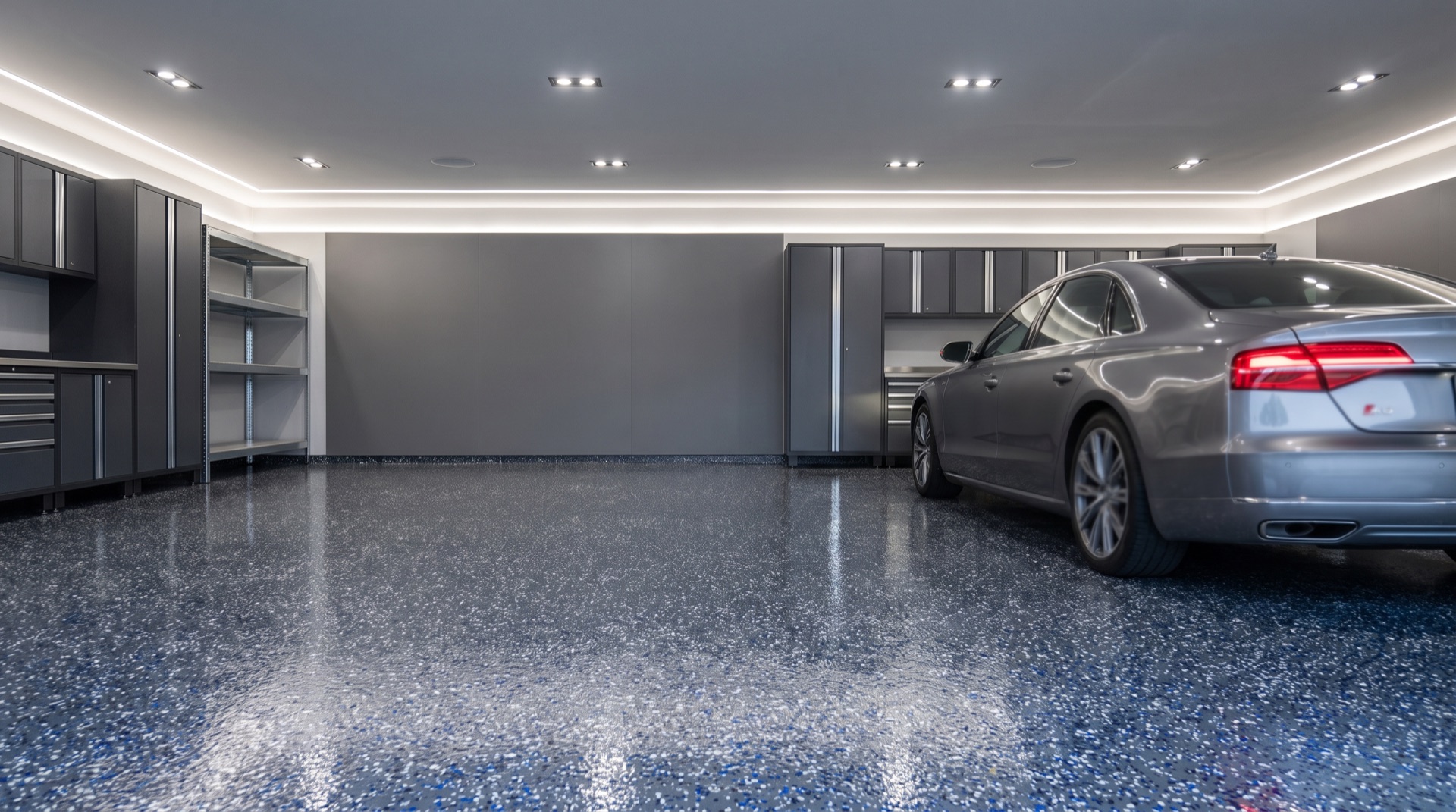
The whole floor happens between breakfast and dinner
The headline is simple: a standard 1–2-car garage is ground, coated, flaked, and sealed in one day. The reason it's possible is the material — fast-curing polyaspartic lets each step cure in hours instead of overnight, so a crew can move straight through the process without waiting a day between coats. Here's roughly how the hours break down.
The install-day timeline
- Grinding & prep (1–2 hrs). The slab is diamond-ground to a clean profile and cracks and joints are chased out and filled. This is the step that decides the whole floor's lifespan.
- Base coat (1 hr). A fast-curing polyurea or epoxy base is squeegeed and back-rolled into the profiled concrete.
- Flake broadcast (into the wet base). Decorative flake is thrown to refusal while the base is still wet, giving the floor its texture and grip.
- Cure + scrape (1–2 hrs). The base cures enough to walk on, then loose flake is scraped back to a smooth surface.
- Polyaspartic topcoat (1 hr). The UV-stable clear coat seals everything into one glossy, durable surface.
All in, that's typically a 6–10 hour day for a residential garage, depending on size and slab condition.
Walk in hours, park in a dayBecause polyaspartic cures fast, you can usually walk on the floor a few hours after the final coat and drive a car back on it in about 24 hours. Full chemical cure keeps developing over the next several days, so it's smart to avoid dragging heavy tool chests or dropping sharp steel on it right away — but for daily use, one day is the number.
What can make it longer
- Old coating removal. Grinding a previously failed or painted floor off an older Mandarin slab adds prep time.
- Heavy damage. A lot of cracking, spalling, or pitting needs more repair before coating.
- Large or commercial floors. Warehouses and multi-bay commercial spaces often run 2–3 days.
- Weather. Extreme cold or a wet, humid stretch can slow cure and occasionally push a job.
Why not just use epoxy?
Traditional epoxy is the reason people expect a garage floor to take "a few days." Each epoxy coat can need 12–24 hours to cure before the next goes on, so a full system stretches across several days — and it's not UV-stable, so it yellows outdoors. Polyaspartic collapses that timeline into a day and holds its color in the sun. If you're weighing the two, see polyaspartic vs. epoxy.